Austria Food Guide 2026: What to Eat, Where to Go & Best Restaurants
This post contains affiliate links. If you book through these links, we may earn a small commission at no extra cost to you. This helps us keep creating free travel guides! Read our full Affiliate Disclosure
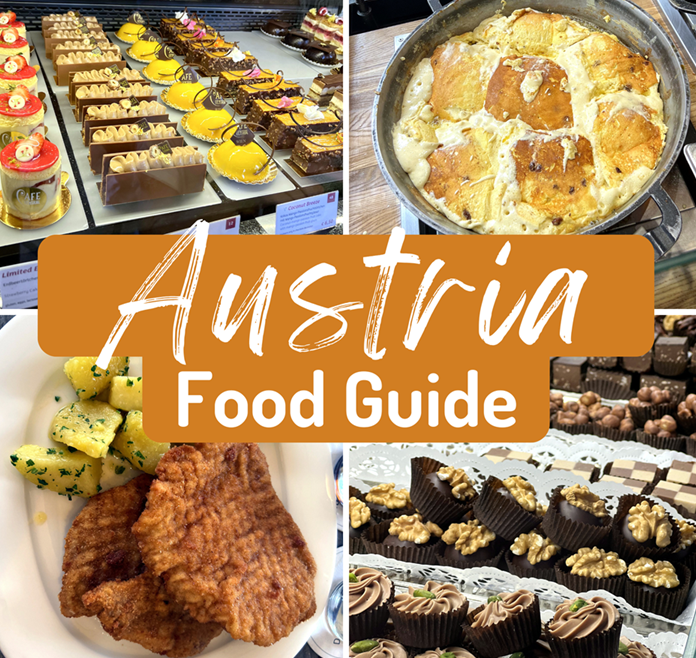
This is our Austria food guide — and honestly, it might be the most fun we’ve had eating our way through any country in Europe. Austrian cuisine runs deeper than schnitzel and strudel — this is a food culture where the coffee house is UNESCO Intangible Cultural Heritage, where sausage stands earned their own UNESCO listing in 2024, and where the rivalry over who makes the better Sachertorte literally went to court for nearly a decade. Centuries of Habsburg Empire influence — Hungarian goulash, Bohemian dumplings, Salzburger Nockerl — all absorbed and made entirely Austria’s own. With Eurovision 2026 bringing the world to Vienna in May, there has never been a better moment to eat your way through this country.
📌 Save This Guide for Later!
Planning a trip to Vienna or Salzburg? Pin this guide so you can find it when you’re ready to book — schnitzel, Sachertorte, coffee houses and all.
📌 Pin this guide →When to Visit Austria for the Best Food
High Season (May–August)
Warm weather, long days, and Vienna’s famous Heuriger wine taverns at full swing in the suburbs. Naschmarkt is at its most colourful. Expect queues at Figlmüller and Café Sacher and premium pricing across the board. Salzburg’s Salzburg Festival runs July–August and fills the city with opera lovers and the restaurants that feed them.
Shoulder Season (April & September–October)
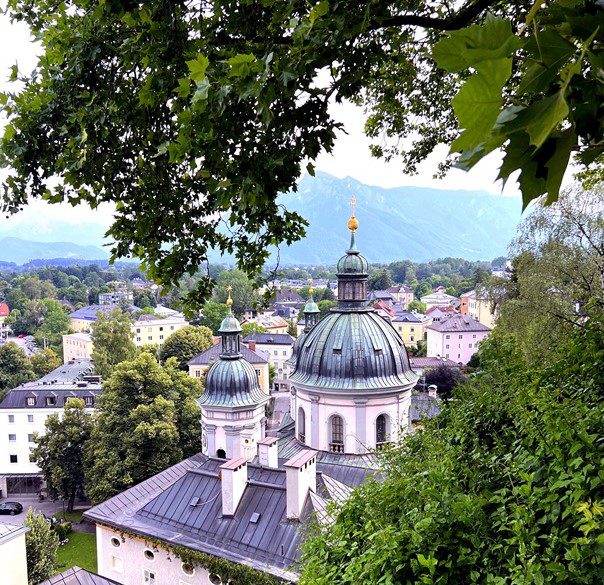
The sweet spot. Good weather, manageable crowds, and easier restaurant reservations. October is Restaurant Month in Vienna — participating restaurants offer special prix fixe menus at reduced prices, making it the best month for budget-conscious foodies who still want quality. Spring brings the first terrace tables and the city feels newly alive after winter.
Low Season (November–March)
Vienna’s Christmas markets run late November through December 24 and are genuinely magical — Rathausplatz becomes a sea of Glühwein, roasted chestnuts, and seasonal pastries. January and February are quiet, cheaper, and the easiest time to walk into Figlmüller or Plachutta without a reservation. January also sees the Vienna Coffee Festival — basically a religious event in this city.
Austria Food Guide Special: Eurovision 2026 (The Big Reason to Go This Spring)
Vienna is hosting the 70th Eurovision Song Contest in May 2026 — semi-finals May 12 and 14, Grand Final May 16 at Wiener Stadthalle. The Eurovision Village at Rathausplatz runs May 10–17 with free entry, live music, and food stalls, and the energy is unlike anything else in Europe. Hotel prices have surged and tickets sell out in minutes — if you’re planning a trip this spring, move fast on accommodation.
What Makes Austrian Cuisine Unique?
Habsburg Empire Influence on Flavor
For centuries, Vienna was the capital of an empire stretching from Italy to Hungary to the Balkans — and the cuisine absorbed it all. Hungarian goulash, Bohemian dumplings, Italian schnitzel origins, and Balkan spicing all made their way into the Austrian kitchen and were adopted so completely they now feel indigenous. The result is a cuisine that is simultaneously Central European and cosmopolitan — hearty enough for Alpine winters, refined enough for imperial palaces.
Coffee house culture
The Viennese coffee house is not a café — it is an institution. You order one coffee, find a seat, and stay for as long as you like. Hours, if you want. You will not be rushed. Newspapers on wooden frames are traditional. A small glass of water arrives with your coffee and is quietly refilled without asking. Historic coffee houses like Café Central (where Lenin and Trotsky drank coffee), Café Hawelka, and Café Sacher are as central to understanding Vienna as any museum or palace.
Vienna is the world’s largest wine-producing capital city
There are actual working vineyards within the city limits. The signature grape is Grüner Veltliner — dry, peppery, mineral, and the perfect match for Wiener Schnitzel. The uniquely Viennese wine tradition is Gemischter Satz, a field blend of multiple grape varieties grown and fermented together. Visit a Heuriger (wine tavern) in the suburban villages of Grinzing or Nußdorf — look for the pine branch hanging above the door, signaling new wine is available — and stay for hours.
Austria Signature Dishes & Snacks
Wiener Schnitzel
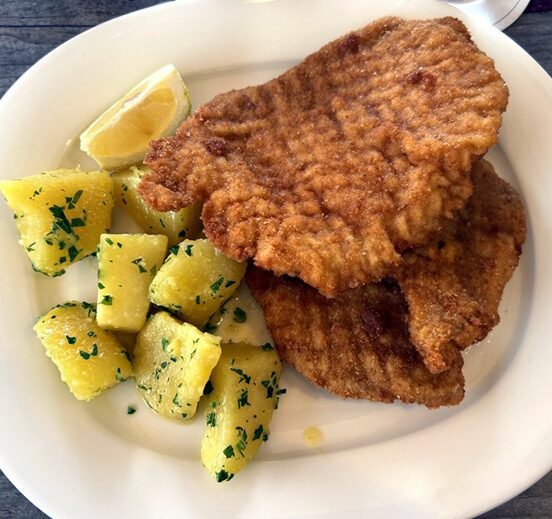
Austria’s national dish and possibly the most famous cutlet in the world. Veal pounded thin, breaded in flour, egg, and breadcrumbs, then pan-fried in butter until perfectly golden. Served with nothing but a lemon wedge and Erdäpfelsalat (Austrian potato salad — vinegar-dressed, never mayo). The schnitzel must be veal to be called Wiener Schnitzel — pork versions exist but go by a different name.
Where to try: Figlmüller Bäckerstraße — the legendary ‘Home of the Schnitzel’ since 1905
Tafelspitz
Rumor is that Emperor Franz Joseph ate Tafelspitz daily for over 60 years (can you imagine?). Prime boiled beef simmered low and slow in broth with root vegetables, served with apple-horseradish sauce and chive sauce. The broth comes first as a soup, then the beef arrives with accompaniments. It looks simple and tastes absolutely wonderful.
Where to try: Plachutta Wollzeile — the definitive version
Sachertorte
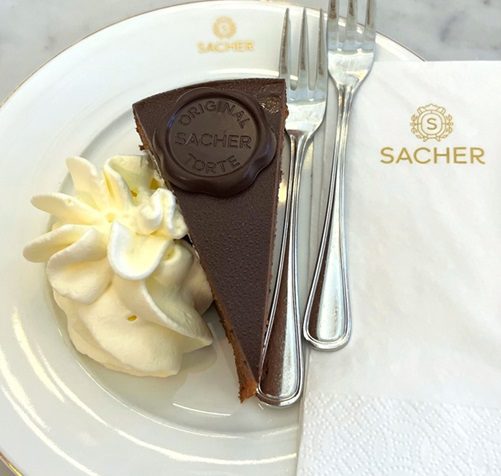
The most famous cake in the world’s most famous pastry culture. Dense chocolate cake layered with apricot jam, coated in dark chocolate glaze. Invented in 1832 by 16-year-old Franz Sacher. The legal battle between Café Sacher and Café Demel over the ‘original’ recipe ran from 1954 to 1963 — Sacher won. Come for the cake and stay for the atmosphere, even if the coffee house itself is a little chaotic.
Where to try: Café Sacher Wien for the original, Café Demel for the quieter (and arguably equally delicious) alternative
Apfelstrudel
Flaky pastry stretched by hand until thin enough to read a newspaper through, filled with spiced apples, raisins, and cinnamon, rolled tight and baked golden. Served warm with vanilla ice cream or a cloud of Schlagobers (whipped cream). Making proper strudel pastry from scratch is considered an art form — the strudel-making demonstration at Café Residenz in Schönbrunn Palace is worth watching.
Where to try: Café Central or anywhere that makes it in-house
Kaiserschmarrn
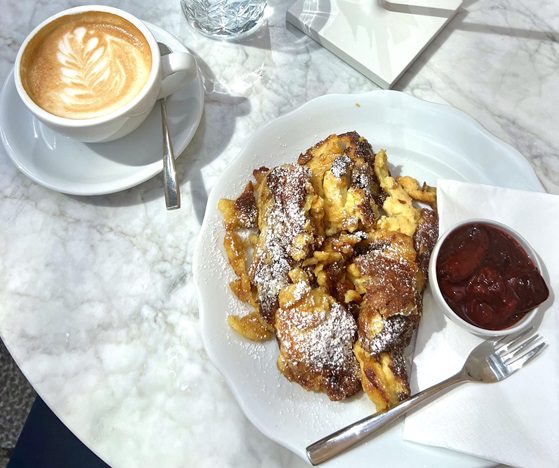
Shredded caramelized pancake dusted with powdered sugar and served with Zwetschkenröster (plum compote). Named after Emperor Franz Joseph, who allegedly knocked over his pancake and turned the accident into an institution. Richer than a regular pancake, cooked in butter, torn into irregular pieces and caramelized until the edges are slightly crispy. One of Austria’s great comfort desserts.
Where to try: Bärenwirt or most traditional restaurants across Vienna and Salzburg
Käsekrainer (Würstelstand Sausage)
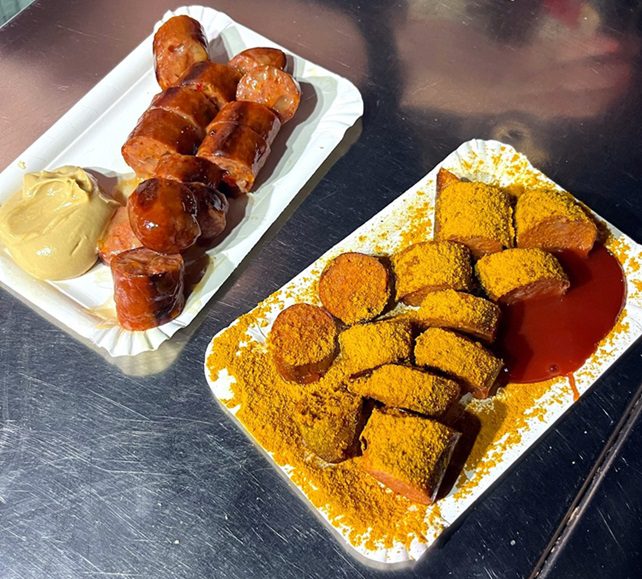
Vienna’s most beloved street food — pork and beef sausage filled with chunks of Emmental cheese that create little pockets of molten richness when you bite in. Served in a crusty Semmel roll with mustard. The Würstelstand (sausage stand) experience is quintessentially Viennese: you eat standing at a street kiosk at any hour, often post-midnight, alongside office workers, opera-goers, and everyone in between. These stands were added to UNESCO’s Intangible Cultural Heritage list in 2024.
Where to try: Bitzinger am Albertinaplatz — right across from the Vienna State Opera, legendary.
Beef Goulash (Rindsgulasch)
Austrian goulash is darker, richer, and more deeply seasoned than its Hungarian cousin — slow-cooked beef in paprika and caraway sauce, thick enough to coat a bread dumpling completely. A staple of every Viennese Beisl, it’s the dish that embodies Gemütlichkeit most completely. Order it on a cold evening and you will immediately understand why this country produces so many good writers — they had to have something to eat while they were thinking.
Where to try: Gasthaus Pöschl or Café Hawelka for a classic version.
Knödel (Dumplings)
Bread dumplings are Austria’s great accompaniment — large, soft, and pillowy, made from day-old bread, milk, and egg. They appear everywhere: alongside goulash, with roast meats, and in their sweet form (Marillenknödel) as a summer dessert filled with a whole apricot. Sweet Marillenknödel made with Wachau apricots in July–August is one of the most seasonally specific and genuinely special Austrian food experiences.
Mozartkugeln (Salzburg)
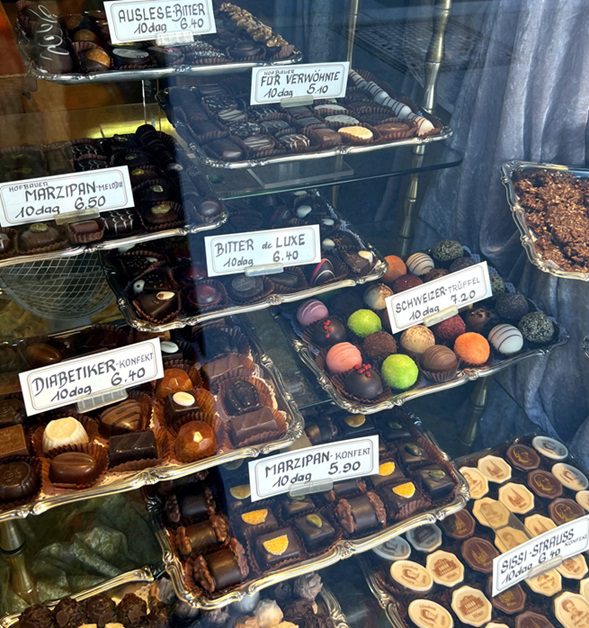
Salzburg’s most famous export — a confection of marzipan and pistachio nougat wrapped in dark chocolate, packaged in gold and red foil with Mozart’s face on it. The original version is made by Konditorei Fürst and sold in silver foil (not gold) from their shop on Brodgasse. The gold-foil mass-produced versions everywhere else are fine but not the same. If you’re in Salzburg, find the silver ones.
Where to try: Konditorei Fürst in Salzburg — the original since 1890
Salzburger Nockerl
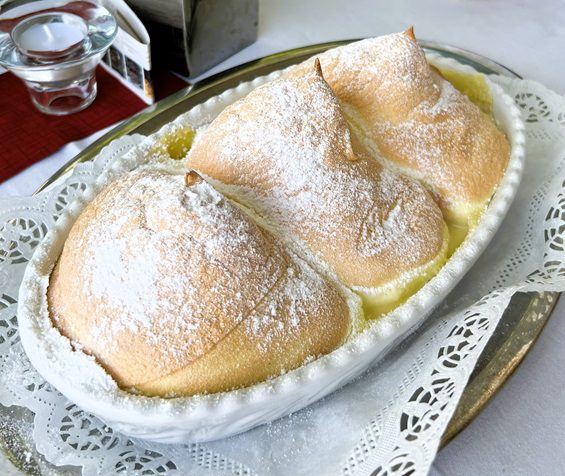
Salzburg’s signature dessert and a matter of city pride. A soufflé-like sweet dumpling — golden and crisp on the outside, feather-light inside — that arrives dramatically puffed up on the plate and must be eaten immediately before it collapses. Flavoured with lemon and vanilla, dusted with powdered sugar. The three peaks are said to represent Salzburg’s three hills. Only available in Salzburg — don’t leave without ordering one.
Where to try: St. Peter Stiftskulinarium — Europe’s oldest restaurant is the right place to order Salzburg’s most iconic dessert
Backhendl Fried Chicken
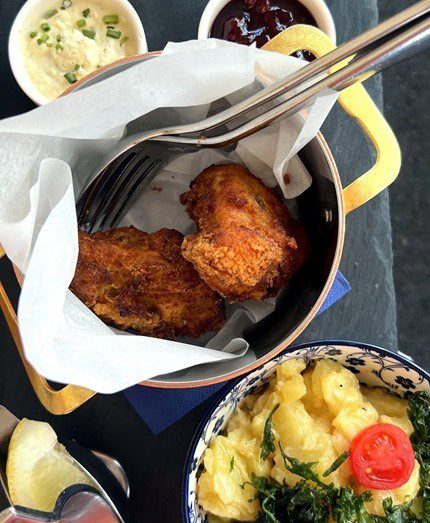
Backhendl is Austria’s answer to fried chicken — and honestly, it might be one of the best we’ve ever had. Chicken breaded in fine breadcrumbs, and fried until the coating is shatteringly crisp and golden while the meat inside stays impossibly juicy. It’s a dish that looks simple and tastes like it took genuine skill, because it did. Traditionally served with a wedge of lemon and a light potato salad, it’s been on Austrian menus since the 18th century and shows absolutely no signs of going anywhere. Order it every time.
Where to try: Bärenwirt in Salzburg has delicious Backhendl fried chicken
Drinks & Specialties
Viennese Coffee (Wiener Kaffee)
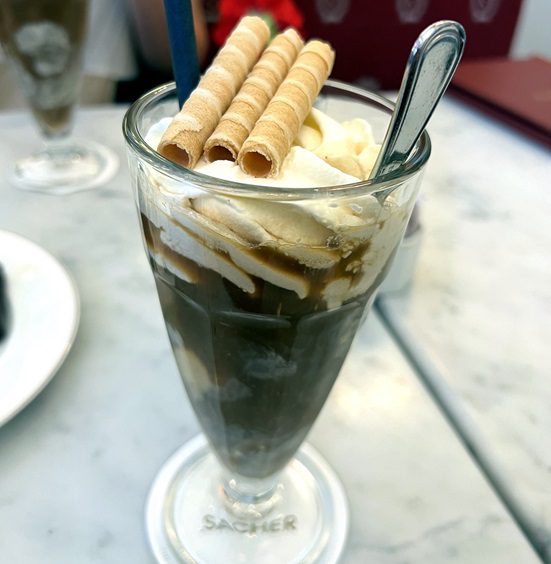
Coffee in Vienna is not a drink — it is a culture, a ritual, and a UNESCO heritage. The menu reads like a philosophy textbook: Wiener Melange (the Viennese cappuccino), Einspänner (strong black in a glass with whipped cream), Verlängerter (longer, milder espresso), and Brauner (espresso with a dash of cream). Order whichever you like, find a marble table, and stay as long as you need to. Nobody will rush you.
Best coffee houses: Café Central (grand historic atmosphere), Café Hawelka (bohemian, dark, unchanged since 1939), Café Landtmann (the locals’ favorite near the Rathaus)
Grüner Veltliner & Heuriger Wine
Austria’s signature dry white wine — crisp, peppery, and mineral. The ideal match for Wiener Schnitzel. Vienna is the world’s only major capital with working vineyards within city limits. Visit a Heuriger (wine tavern) in the suburban villages of Grinzing or Nußdorf — rustic tables, cold buffet platters, wine poured in ceramic jugs — and stay for the evening. Look for Gemischter Satz on the menu, Vienna’s unique field-blend white. Sturm (partially fermented grape juice) is only available September–October and worth seeking out if you’re there at the right time.
Where to drink: Heuriger Mayer am Pfarrplatz — Beethoven once lived here
Austrian Schnapps (Schnaps)
Fruit brandy distilled from whatever is in season — Marillenschnapps (apricot, especially from the Wachau valley) and Zwetschgenschnapps (plum) are the most celebrated. Higher alcohol but surprisingly smooth and aromatic. Drunk straight as a digestif after a meal. Quality Austrian Schnaps is a craft product and nothing like the cheap imported versions. Order one at the end of any traditional Austrian meal and raise your glass properly.
Best Restaurants in Vienna
Casual & Traditional Dining
Figlmüller Bäckerstraße
Figlmüller has been the home of the schnitzel since 1905 and the moment yours arrives you understand exactly why it’s still packed a century later. Go to the Bäckerstraße location rather than the original Wollzeile; the menu is bigger, you can actually order a beer with your schnitzel, and the service is friendlier. Book ahead no matter which one you choose — they don’t leave tables sitting empty for long.
Plachutta Gasthaus zur Oper
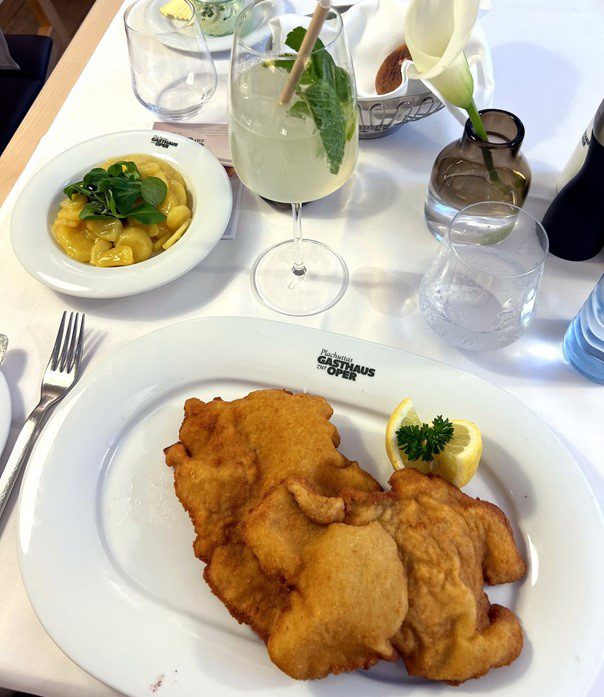
Plachutta Gasthaus zur Oper sits right across from the Vienna State Opera and it is exactly the kind of restaurant you want to walk into after a performance — warm wood panelling, proper Austrian food, and late kitchen hours that the opera crowd depend on. The Wiener Schnitzel is the focus here and it is excellent — veal, buttery, perfectly crisp. The location and setting make it feel a little more occasion-worthy than the Wollzeile original, and in summer the courtyard terrace is genuinely lovely. Reserve ahead, especially around show times.
Café Central
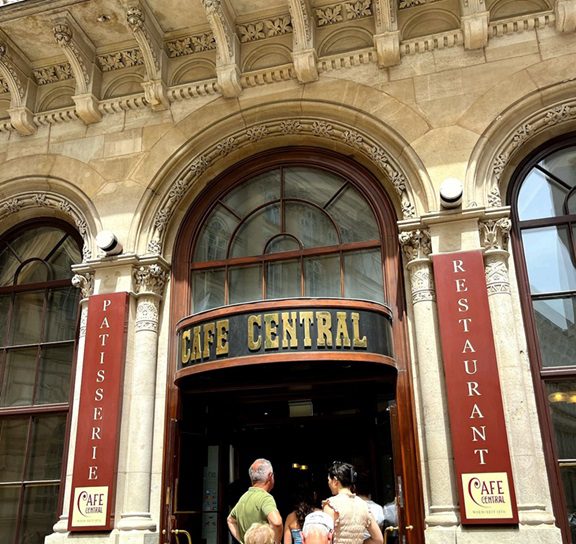
One of Vienna’s grandest historic coffee houses in a beautifully restored 19th-century palace arcade. Lenin, Trotsky, and Freud all drank coffee here — the regulars section on the wall is worth reading. The arched ceilings, marble columns, and resident piano player make it one of the most atmospheric rooms in Europe. Come for breakfast or afternoon coffee, order the apple strudel, and let yourself stay longer than planned.
Upscale & Fine Dining
Mraz und Sohn
Time Out Vienna’s pick for the city’s best restaurant — family-run, Michelin-starred, and worth every euro. Lukas Mraz runs the open kitchen in the Brigittenau neighbourhood, far from the tourist circuit. Contemporary Austrian cuisine that is seasonal, precise, and deeply rooted in local tradition while pushing creative boundaries. Definitely more of a special occasion kind of place. Book months ahead.
Café Sacher Wien
Iconic, historic, and completely unmissable as a cultural experience. The original Sachertorte, red velvet interiors, and formal Viennese service make this one of those places you need to go once. Come for the cake and a Wiener Melange — ordering at the marble counter to take away is faster than waiting for a table.
Best Restaurants in Salzburg
St. Peter Stiftskulinarium
Europe’s oldest restaurant — documented since 803 AD, with a claimed visit from Charlemagne. Set inside the walls of St. Peter’s Abbey in Salzburg’s UNESCO Old Town. The baroque rooms are SO atmospheric, the Austrian and Mediterranean cuisine is delicious, and the Salzburger Nockerl is the non-negotiable order. Reservations essential — book well ahead.
Panoramarestaurant zur Festung Hohensalzburg
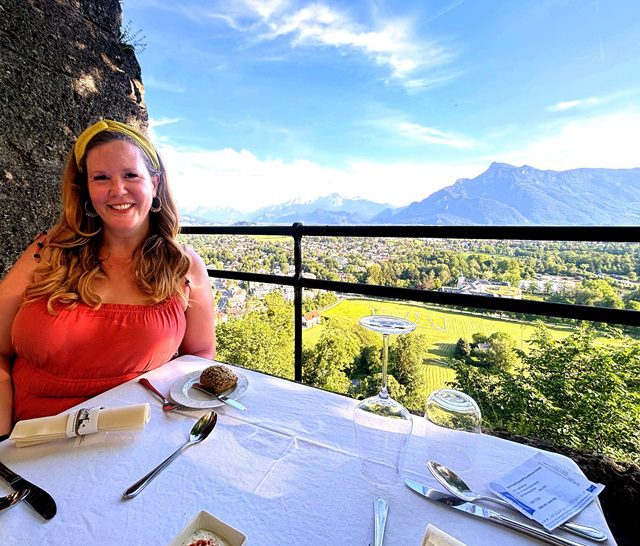
The Panoramarestaurant zur Festung Hohensalzburg sits inside the walls of Austria’s largest medieval fortress, high above the rooftops of Salzburg, and the view from the terrace is one of those moments that makes you put your fork down just to look. We also had the Salzburger Nockerl here and the timing felt exactly right: a dessert this theatrical needs a setting to match, and a 900-year-old castle above Mozart’s birthplace absolutely delivers. The food won’t change your life but it doesn’t need to — you’re eating on top of a fortress with all of Salzburg at your feet, and that is entirely enough. Go for the terrace on a clear day and don’t skip the Nockerl.
Where to Stay in Vienna for Foodies
Innere Stadt (1st District) — Best for First-Timers
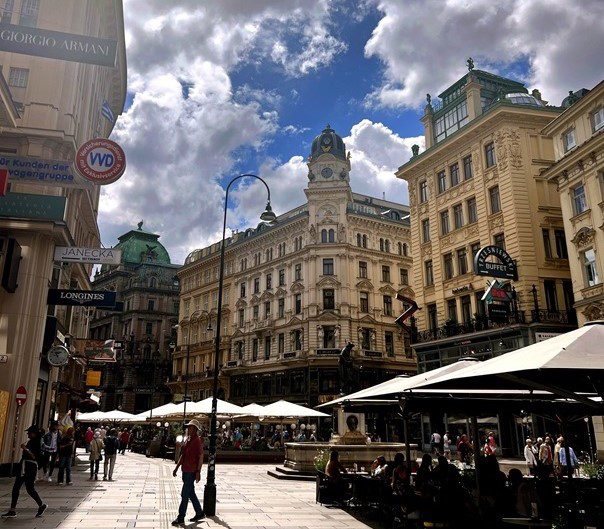
Vienna’s historic heart and a UNESCO World Heritage Site. Walking distance to St. Stephen’s Cathedral, Hofburg Palace, Vienna State Opera, Café Sacher, Café Central, and most of the city’s best restaurants. The most expensive area — but for a first visit, the convenience is genuinely hard to argue with. If you’re here for Eurovision 2026, the Wiener Stadthalle venue is one U6 metro stop away.
🏨 Where to Stay in Innere Stadt
Staying in the 1st District puts you inside Vienna’s grand historic centre — a 5-minute walk from Café Central, 10 minutes from the Opera, and right in the heart of everything. If this is your first time in Vienna, it’s the obvious choice.
Browse Innere Stadt hotels →Neubau (7th District) — Best for Local & Creative Feel
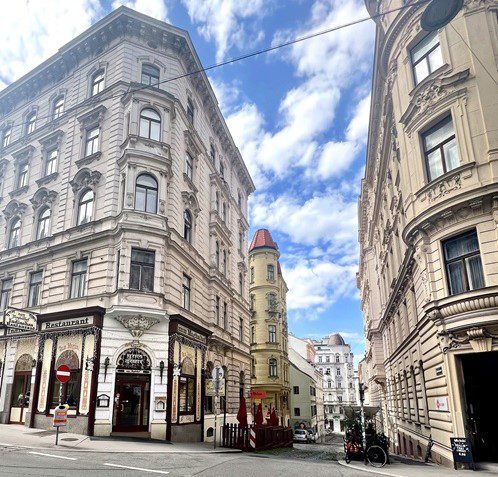
Vienna’s creative and arts district — home to the MuseumsQuartier (Leopold Museum with Klimt and Schiele, MUMOK contemporary art), indie boutiques, hip cafes, and a genuinely young energy. Less touristy than Innere Stadt, more affordable, and surrounded by excellent independent restaurants. About 10–15 minutes’ walk from the historic centre.
🏨 Where to Stay in Neubau & MuseumsQuartier
Neubau gives you a genuinely local Vienna experience — great cafes, independent restaurants, and the massive MuseumsQuartier right on your doorstep, all at a friendlier price than the 1st District.
Browse Neubau & MuseumsQuartier hotels →Mariahilf/Wieden — Best for Foodies & Value
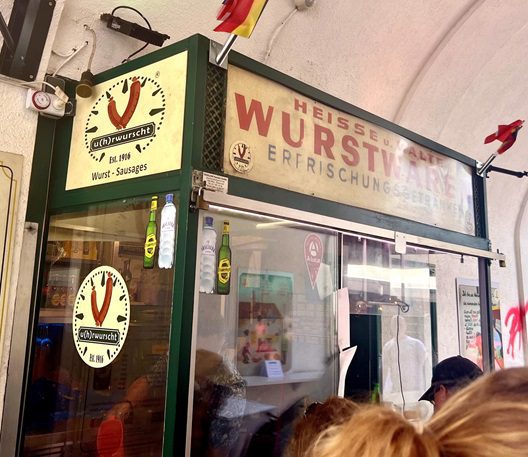
The Naschmarkt — Vienna’s enormous open-air food market — sits right on the border of these two districts. A more local neighbourhood feel with affordable cafes, independent restaurants, and boutique shopping on Mariahilfer Straße. About 10 minutes’ walk from the Innere Stadt and well-served by the U1, U2, and U4 metro lines. The best base if you want to be immersed in Viennese food culture from the moment you step outside.
🏨 Where to Stay near Naschmarkt (Mariahilf/Wieden)
Rolling out of bed and into Vienna’s best food market is a genuine pleasure. This neighbourhood gives you local energy, great value, and easy metro access to every major sight in the city.
Browse Mariahilf/Naschmarkt hotels →Getting Around Austria with a Rental Car
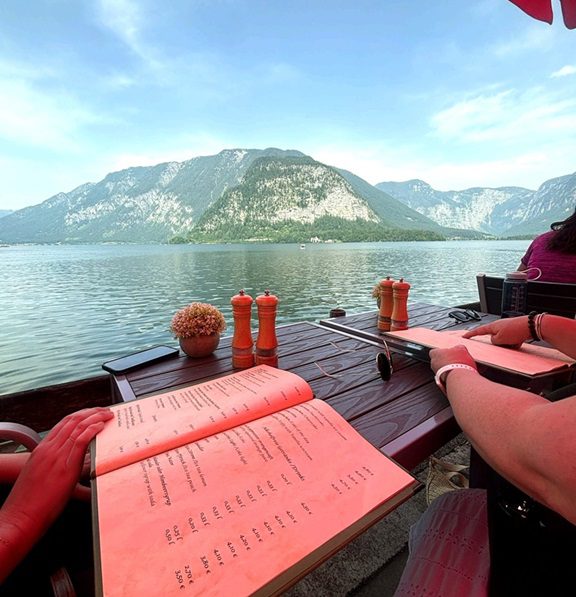
Renting a car at Vienna Airport and driving to Salzburg is one of the best things we did in Austria. The three-hour journey through the countryside is genuinely lovely — green hills, Alpine peaks growing larger in the windshield, and roads that are well-maintained and completely stress-free once you’re out of the city.
Break the drive up with a stop in Hallstatt, the impossibly picturesque lakeside village about halfway. Find a table with a view of the lake and the mountains, have lunch, and stay longer than you planned. It adds barely an hour and earns every minute.
🚗 Rent a Car & See the Real Austria
Vienna doesn’t need a car — but everywhere beyond it does. Pick one up at the airport and the whole country opens up: the drive to Salzburg through the Alpine countryside, a lunch stop in Hallstatt, wine villages on the city’s edge. One of the best decisions we made on the trip.
Compare car rental prices in Austria →Where to Stay in Salzburg
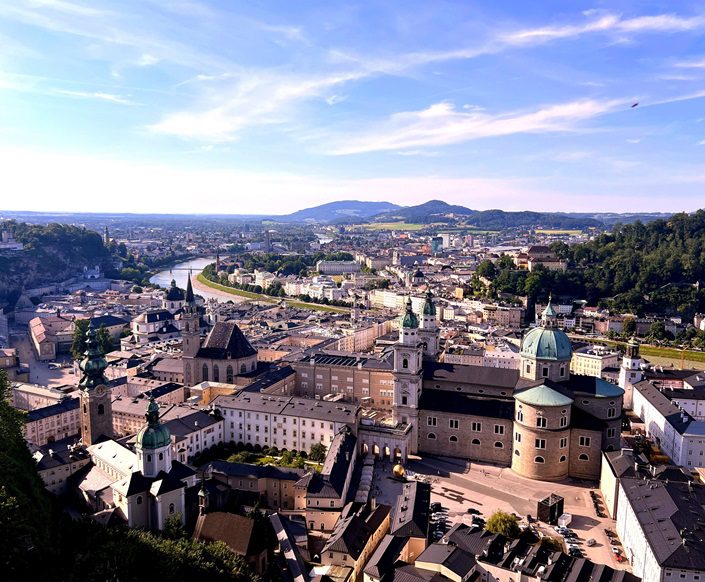
Stay in or as close to the Altstadt (Old Town) as possible. The Old Town is compact, walkable, and UNESCO-listed — everything worth doing is within 15 minutes on foot: Getreidegasse (Mozart’s birthplace), Fortress Hohensalzburg, St. Peter Stiftskulinarium, Grünmarkt, and the Salzach riverfront. Old Town hotels are expensive, but in Salzburg the convenience genuinely justifies the premium. Staying across the river in Schallmoos is a quieter, more affordable alternative with easy walking access via bridge.
🏨 Where to Stay in Salzburg Altstadt
The Old Town is Salzburg — walk to St. Peter for dinner, stroll to the Grünmarkt for breakfast, and have the Fortress above you the whole time. It’s the best base for a short Salzburg trip.
Browse Salzburg Altstadt hotels →Our Favorite Experiences in Austria
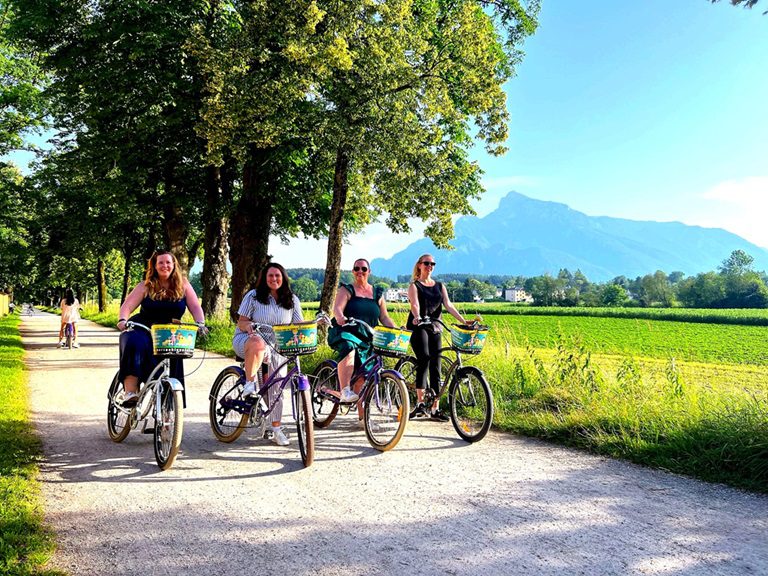
We’d skip the guided food tours and concerts with dinners in Austria — we did one of each and both felt rushed, and the food rarely matched what you’d get simply walking into a good restaurant and ordering for yourself. The beauty of Austrian cuisine is that it’s genuinely easy to navigate on your own: sit down, order the schnitzel, ask for the Nockerl. You don’t need a guide for that. What we do think is worth booking ahead are the experiences that are harder to replicate solo — and these are the ones we loved.
Vivaldi’s Four Seasons Concert
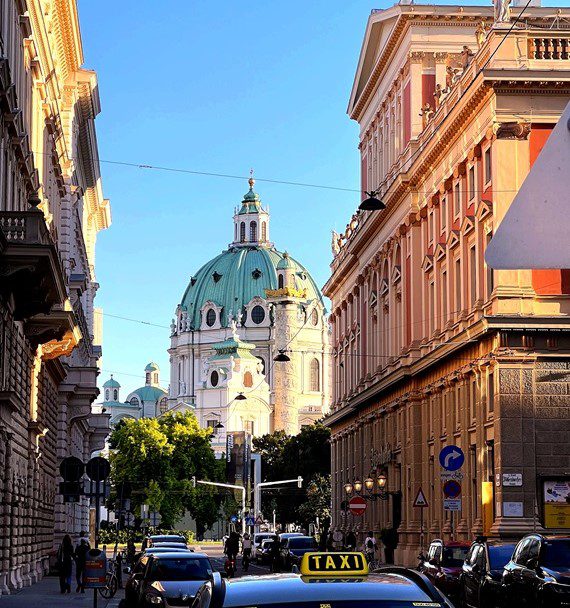
Vivaldi’s Four Seasons performed by a period instrument ensemble inside the Karlskirche — one of Vienna’s most beautiful baroque churches — was one of the highlights of our entire trip. The setting is extraordinary, the acoustics are perfect, and the concert is brilliantly organised from start to finish. Seventy-five minutes of some of the most iconic classical music ever written, in a church that feels like it was built specifically for this moment. Book it. You won’t regret it.
🎻 Best Experience in Vienna: Vivaldi’s Four Seasons at Karlskirche
One of the most memorable evenings of our entire trip — Vivaldi’s Four Seasons performed by a period instrument ensemble inside one of Vienna’s most beautiful baroque churches. Brilliantly organised, 75 minutes, and absolutely worth every penny. Book early — this one sells out fast.
Book Vivaldi’s Four Seasons at Karlskirche →“Light of Creation” Votivkirche Immersive Light Show
The Light of Creation at the Votivkirche is thirty minutes inside one of Vienna’s most beautiful neo-Gothic churches, completely transformed by an immersive light and sound show projected across the vaulted ceilings and stonework. Totally unexpected, genuinely spectacular, and unlike anything else we did in the city. A very easy yes.
✨ Best Evening Experience in Vienna: Light of Creation at Votivkirche
Thirty minutes inside the Votivkirche as the entire church transforms around you — vaulted ceilings, Gothic stonework, and the full interior alive with colour and light. Totally unexpected and genuinely spectacular. One of the most unique things we did in Vienna.
Book Light of Creation at Votivkirche →Salzburg: Sound of Music Tour
The Original Sound of Music Tour is one of those experiences that sounds a little cheesy until you’re actually on it — and then you completely understand why it has thousands of five-star reviews. Four hours touring Salzburg and the surrounding countryside, visiting the actual filming locations, with songs from the soundtrack playing as you go. We went with friends and it was genuinely one of the most fun afternoons of the whole trip — lots of laughing, great guides, and views of the Austrian countryside that honestly rival anything in the film. You don’t need to be a Sound of Music superfan to love it. You just need to show up.
🎵 Best Experience in Salzburg: The Original Sound of Music Tour
Four hours touring Salzburg and the surrounding countryside, visiting the actual filming locations, with the soundtrack playing as you go. So much fun — especially with friends or family. You don’t need to be a Sound of Music superfan to love it. Book early, this one sells out fast.
Book the Original Sound of Music Tour →Frequently Asked Questions About Austria Food
What is the most famous food in Austria?
Wiener Schnitzel is Austria’s most iconic dish — a thin breaded veal cutlet fried golden, served with lemon and Austrian potato salad. It is so associated with Vienna that the city’s name is literally in the dish (Wiener means Viennese). For desserts, Sachertorte and Apfelstrudel are the most internationally famous. If you only eat one thing: the schnitzel. If you only order one dessert: the strudel.
What is the difference between Café Sacher and Café Demel for Sachertorte?
Both claim the ‘original’ Sachertorte. Café Sacher won the legal battle (1954–1963) and their version has two apricot jam layers — one inside, one below the chocolate glaze. Café Demel’s version has jam only under the glaze. Sacher is more famous, more crowded, and slightly more expensive. Demel is often quieter, equally delicious, and has a beautiful interior. Most Viennese will quietly tell you that both are excellent and the real original died with Franz Sacher in 1907.
How does Viennese coffee house culture work?
Order your coffee, find a seat, and stay as long as you like. Hours, if you want. You will not be rushed. A small glass of water arrives with your coffee and is quietly refilled without asking. Reading newspapers on wooden frames is traditional. Tipping is standard — round up or add 10%. Budget at least 45 minutes for any proper coffee house visit. The experience is the point, not the speed.
Is Vienna expensive for food?
Vienna spans every budget. A Käsekrainer at a Würstelstand is €4–7. A lunch at a traditional Beisl is €12–20 per person. A mid-range Austrian restaurant dinner runs €30–50 per person. Fine dining (Mraz und Sohn) is €80–150+. Café Sacher’s Sachertorte is about €11 per slice. Compared to London or Paris, Vienna is good value for quality. The Würstelstand will always be your best friend for a cheap, fast, genuinely authentic snack.
What should I eat in Salzburg specifically that I can’t get in Vienna?
Salzburger Nockerl — the dramatic soufflé dumpling dessert — is only available in Salzburg. Kaspressknödel (pan-fried cheese and bread dumplings, often in soup) are more common in Salzburg and western Austria than Vienna. Mozartkugeln from Konditorei Fürst (in silver foil, not gold) are the original version of Salzburg’s most famous sweet. And if you’re visiting in season, the Grünmarkt at Universitätsplatz is a daily local food market that feels completely unlike anything in the capital.
What is Eurovision 2026 in Vienna?
The Eurovision Song Contest 2026 is the 70th edition, hosted in Vienna at Wiener Stadthalle. Austria won the 2025 contest with JJ’s ‘Wasted Love’. Semi-finals are May 12 and 14, Grand Final is Saturday May 16. The Eurovision Village at Rathausplatz is open May 10–17 with free entry, live music, and food stalls. Hotel prices have surged dramatically. Even without arena tickets, being in Vienna during Eurovision week is an extraordinary experience — book accommodation as early as possible.
🌍 Continue Your Food Adventure
Loved Austria? Here’s where to head next:
- Rome Food Guide — pasta, pizza, and where to eat like a Roman
- Florence Food Guide — bistecca, truffles, and Tuscan wine
- Barcelona Food Guide — tapas hopping, world-class cocktail bars, and Catalan cuisine
- Norway Food Guide — brown cheese, reindeer soup, and cardamom waffles
- Amalfi Coast Food Guide — clifftop trattorias, fresh seafood, and limoncello
📌 Save This Guide for Later!
Planning a trip to Vienna or Salzburg? Pin this guide to your travel boards so you can find it when you’re ready to book — schnitzel, Sachertorte, coffee houses and all.
📌 Pin this guide →