Where to Stay on the Amalfi Coast 2026: Why We Chose Sorrento & Skipped the Car
The Amalfi Coast is full of colorful villages stacked up cliffs that drop straight into the Tyrrhenian Sea — and figuring out where to stay on the Amalfi Coast is genuinely half the trip. Positano or Amalfi? What about Sorrento? Right on the coast or just outside it? Rent a car or not? We wrestled with all of it before our own trip, and we came away with an approach we’d repeat in a heartbeat.
We spent three days on the coast in late May, and instead of booking a cliffside room in Positano and renting a car to get around, we did the opposite: we based ourselves just past Sorrento, left the rental car parked at the hotel the entire time, and hopped ferries to a different town every day. It was calmer, cheaper, and honestly more fun — and it’s the setup we’d recommend to most first-timers.
This guide covers exactly where we stayed and why, an honest rundown of the coastal towns if you’d rather stay right in the action, and the getting-around strategy that saved us a lot of stress (plus the one ferry mistake that cost us $120). If you’re here for the food too, don’t miss our full Amalfi Coast Food Guide — this is its where-to-stay companion.
📌 Save This Guide for Later!
Planning where to stay on the Amalfi Coast? Pin this for our Villa Fiorella review, an honest take on Positano vs. Amalfi vs. Ravello, and the no-car ferry strategy that made the whole trip easier.
📌 Pin this guide →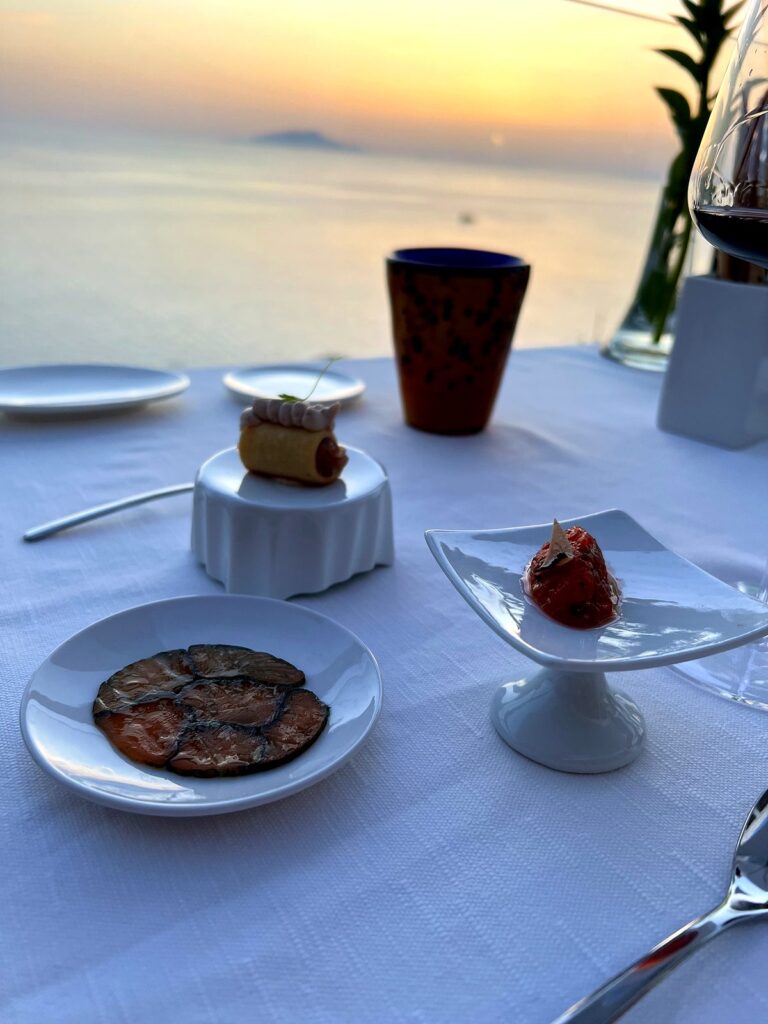
Our Home Base: Art Hotel Villa Fiorella (Massa Lubrense)
We based ourselves at Art Hotel Villa Fiorella in Massa Lubrense, a quiet town just past Sorrento on the peninsula — and it turned out to be the best decision we made. The hotel is beautiful, with a sea-view balcony off our room where we’d have coffee in the morning and wind down at night looking out over the water. It was peaceful in a way the busier coastal towns just aren’t.
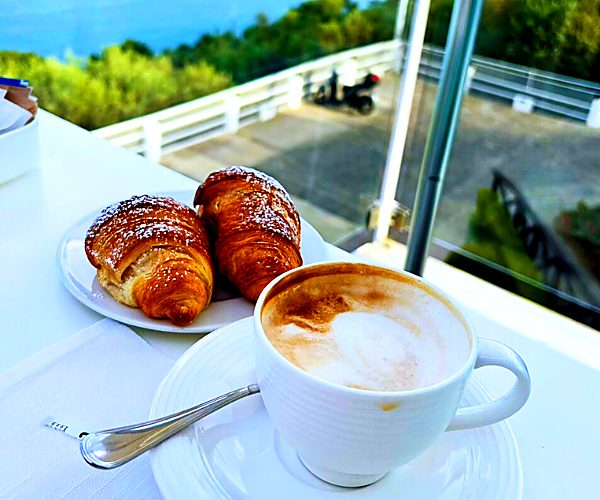
The food alone would bring us back. Breakfast and dinner were both excellent, and the property leans all the way into that “we don’t need to go anywhere tonight” feeling. And the pool — the pool was PHENOMENAL. Most of the time we had it completely to ourselves, floating around with an Aperol spritz in hand and the bay spread out below us. If your idea of a vacation includes an empty infinity pool and a sunset cocktail, this is the spot.

🏨 Where to Stay
Art Hotel Villa Fiorella
A calm, gorgeous base just past Sorrento with unbeatable views and food you’ll want to stay in for — and book early, because small properties like this fill fast in summer.
Check availability →Why We Based Near Sorrento Instead of on the Coast
Here’s the case for staying near Sorrento — in Sorrento itself, or a quieter town like Massa Lubrense nearby — rather than in Positano or Amalfi:
- It’s the ferry hub. From the Sorrento area you can catch boats to Capri, Positano, and Amalfi, so you wake up and pick your town for the day.
- It’s calmer and better value. The cliffside towns are stunning but chaotic and expensive in peak season. A base just outside gives you the views and the access without the crowds or the price tag.
- It’s an easy Naples transfer. Getting to and from the airport or train station is far simpler than winding all the way out to Positano with your luggage.
You do trade one thing: walking out your front door into Positano at golden hour. That’s a real magic, and if it’s your dream, go for it (more on that below). But for a relaxed base with a different gorgeous town every day, we’d base near Sorrento again without hesitating.
Who it suits: first-timers, anyone who wants a calm home base with day trips, and travelers who’d rather spend on great food and ferry days than on a premium cliffside room.

If You’d Rather Stay on the Coast Itself
Totally fair — waking up in Positano is a bucket-list thing. Here’s our honest read on the main towns as places to base yourself.
Positano (the dream — and the priciest)
The most picturesque town on the coast, full stop: pastel houses tumbling down to the beach, cliffside restaurants, lemon groves everywhere. It’s also the most expensive, and it books up months out. If staying here is the dream, lock it in early — hotels are limited and summer demand is brutal.
🏨 Where to Stay
Positano
The cliffside dream — the priciest of the towns and the first to sell out. Book months ahead for summer.
Search Positano Hotels →Amalfi Town (central & better value)
Amalfi is the most central of the big three and the most affordable, with easy ferry connections in every direction. We’ll be honest: of the three towns we visited, Amalfi was the smaller and least eventful — but the Duomo is genuinely stunning and the views are still incredible. As a walkable, well-connected, lower-cost base, it’s a smart pick.
🏨 Where to Stay
Amalfi Town
Central and better value, with easy ferry connections in every direction.
Search Amalfi Town Hotels →Ravello (quiet, with the best views in Italy)
Ravello sits high above the coast, and its clifftop gardens gave us some of the best views we saw in all of Italy — no exaggeration. It’s peaceful and romantic. The catch: it’s up a windy mountain road and removed from the ferry action, so it suits travelers who’ll happily trade convenience for quiet.
🏨 Where to Stay
Ravello
Quiet, romantic, and sky-high views — for travelers who’ll happily trade convenience for calm.
Search Ravello Hotels →Getting Around: Why We Didn’t Drive (and You Probably Shouldn’t Either)
Our single biggest piece of advice: don’t rent a car to get around the Amalfi Coast. We had a rental — and it sat parked at our hotel for all three days. The coastal roads are gorgeous but genuinely stressful: tiny streets, constant traffic, full-size tour buses squeezing past you on hairpin turns, and almost nowhere to park when you finally arrive. Unless you truly love white-knuckle driving, skip it.
What we did instead: a local bus from Massa Lubrense down to Sorrento, then ferries from there. It’s the calm way to travel — you sip a coffee and let someone else handle the road.
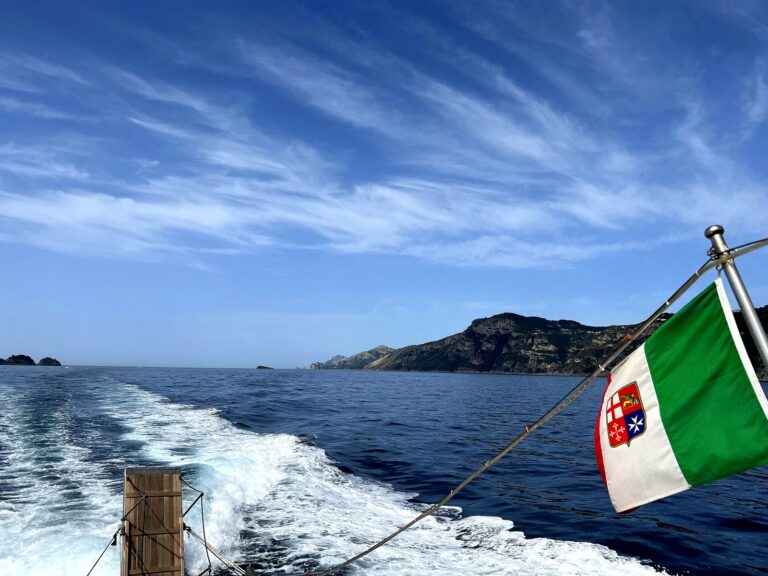
One crucial ferry warning: the boats run often and start early, but the last ferries leave around 5–6pm. Miss them and you’re stuck. We learned this the hard way — after a long day that ended up in Ravello, we’d missed the last boat and had to hire a cab to drive us all the way back to Massa Lubrense. It was a beautiful 45-minute coastal drive at night… that cost us about $120. Check the day’s last ferry before you commit to that final aperitivo.
- SITA buses and local shuttles connect the towns the ferries don’t. The shuttle up to Ravello from Amalfi is the main way up — heads up, it’s a windy climb and a few people on ours got carsick.
- You’ll still want a car for one thing: getting to and from your hotel on arrival and departure day, especially if you’re staying somewhere quieter like Massa Lubrense.
🚗 Rent a Car
For Arrival & Departure Only
Pick up near Naples, drive to your hotel, then leave it parked until checkout.
Compare car rentals →A Few Planning Tips for Where to Stay on the Amalfi Coast
- Book your hotel months ahead. Good rooms — Positano especially — sell out far in advance for summer.
- Go shoulder season if you can. We went in late May/early June: fewer crowds and gorgeous weather, though the water was still a little cold for swimming.
- Build your days around the ferry schedule, not the other way around. Check the last departure the night before.
- Budget realistically. The coast is pricey in peak season, which is exactly why a slightly-removed base can stretch your money further.
Frequently Asked Questions
Where should I stay on the Amalfi Coast?
For most first-timers we’d base in the Sorrento area (we loved Massa Lubrense) and day-trip by ferry — it’s calmer and better value. Stay in Positano if you want the classic cliffside dream and don’t mind the price, Amalfi for a central and more affordable base, or Ravello for quiet and unreal views.
Do you need a car on the Amalfi Coast?
No — we recommend against driving to get around. The roads are narrow, traffic is heavy, and parking is scarce. Ferries and buses do it better; keep a car only for arrival and departure if your hotel needs it.
When is the best time to visit the Amalfi Coast?
Late spring and early fall are the sweet spot. We went in late May/early June and had gorgeous weather with far smaller crowds than peak summer — though the water was still a touch cold for swimming. July and August are the hottest, busiest, and most expensive months.
When does the last ferry leave the Amalfi Coast?
Roughly 5–6pm depending on the route and season — always check the day’s schedule, because missing it can mean an expensive cab ride back.
🇮🇹 Keep Exploring Italy
More from Teal Lemon
Sorted on where to sleep? Here’s the rest of your Amalfi Coast trip — plus Venice for the next leg.
📌 Save This Guide for Later!
Headed to the Amalfi Coast? Pin this so you’ve got our Villa Fiorella base, the Positano-vs-Amalfi-vs-Ravello honest take, and the no-car ferry strategy when you need it.
📌 Pin this guide →