Curaçao Food Guide 2026: Dutch-Caribbean Cuisine, Local Dishes & Where to Eat
This post contains affiliate links. If you book through these links, we may earn a small commission at no extra cost to you. This helps us keep creating free travel guides! Read our full Affiliate Disclosure.
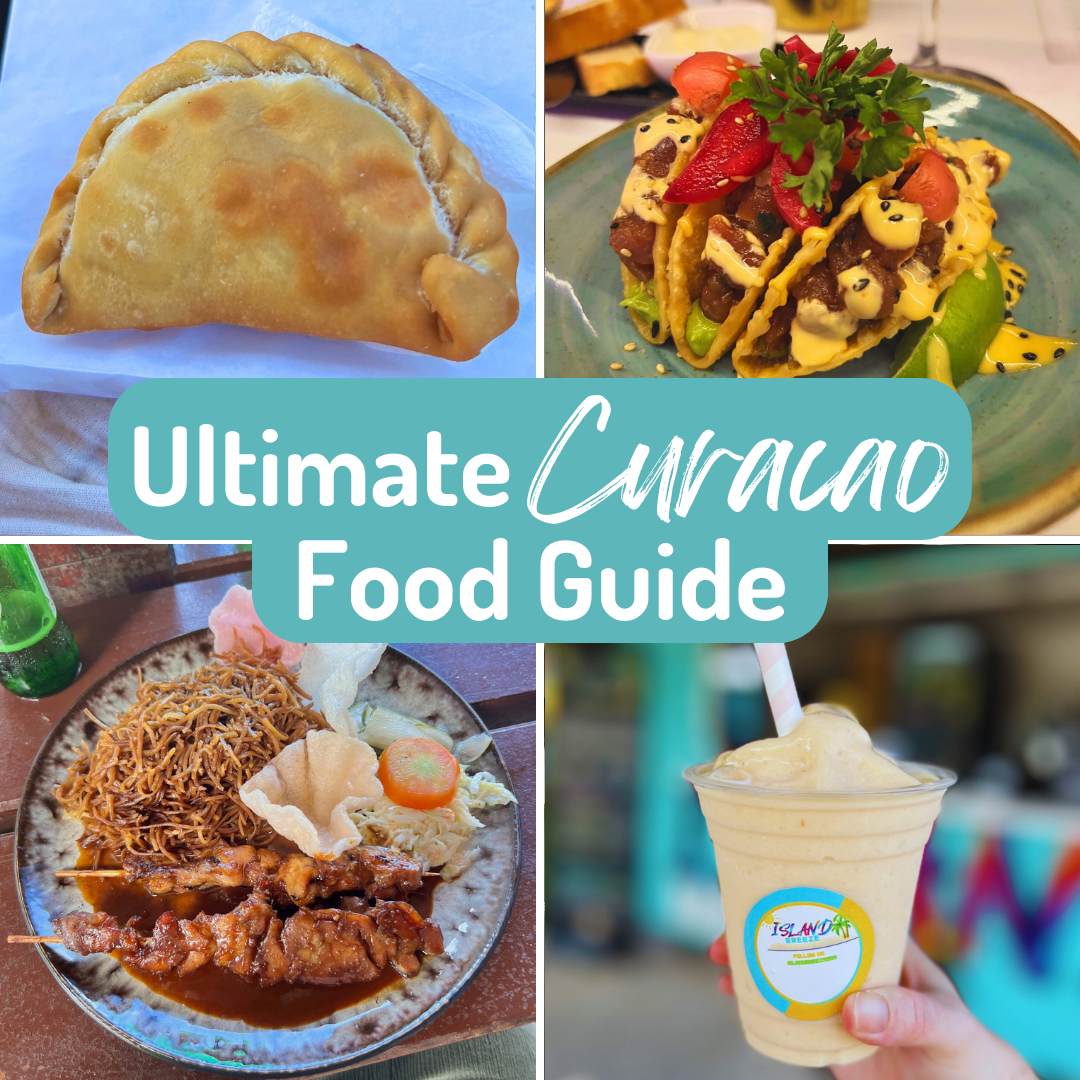
Curaçao’s food scene is as colorful and diverse as the Dutch colonial buildings lining Willemstad’s waterfront. This Caribbean island’s cuisine reflects centuries of cultural fusion – Dutch colonialism, African heritage, Indonesian influences, Spanish touches, and Caribbean soul all blend into unique dishes you won’t find anywhere else. From crispy pastechi (Caribbean empanadas) to Dutch poffertjes pancakes to Indonesian chicken satay, Curaçao’s food tells the story of its multicultural history. This complete Curaçao food guide covers the must-try dishes, where to find authentic local cuisine, and what makes this Caribbean island’s food culture so distinctively delicious.
After exploring Curaçao’s food scene, discover the island’s beautiful beaches with our Curaçao Beaches Guide for the best snorkeling and beach clubs.
📌 Save This Guide for Later!
Planning a trip to Curaçao? Pin this guide to your travel boards so you can find it when you’re ready to book — Dutch-Caribbean cuisine, keshi yena, chicken satay and all.
📌 Pin this guide →When to Visit Curaçao for the Best Food
Year-Round Dining: Curaçao sits outside the hurricane belt with consistent 80-85°F weather year-round, meaning restaurants, food trucks, and beach bars operate every month. Unlike seasonal Caribbean islands, you’ll find the full food scene available whenever you visit.
Peak Season (December-April): All restaurants open, busiest time at popular spots, highest prices. Beach bars and oceanfront restaurants get crowded. Make reservations for upscale dining. Fresh seafood is excellent as fishing conditions are ideal.
Shoulder Season (May-July, November): Perfect balance – all restaurants open, fewer tourists, easier to get tables, slightly lower prices. Local food trucks and beach grills less crowded. Still excellent weather for beachside dining. (Kelly’s and Nik’s Favorite season)
Low Season (August-October): Occasional brief rain showers, fewer tourists, best deals. Most restaurants stay open year-round (unlike other Caribbean islands). Great time for authentic local experiences – eat where locals eat without tourist crowds.
Food Events: Curaçao Culinary Month (October/November) – special menus at restaurants islandwide. Various food festivals throughout the year celebrating local cuisine. You will definitely need a car to explore all restaurants and food events!
🚗 Rent a Car in Curaçao
A rental car is absolutely necessary to experience the full Curaçao food scene. The best restaurants, Indonesian spots, roadside BBQ trucks, beach bars, and food events are spread all across the island — many 20-40 minutes from Willemstad. Without a car you’ll miss most of them. Book early, especially December-April when inventory runs low.
Compare car rental prices in Curaçao →What Makes Curaçao Cuisine Unique?
Multi-Cultural Fusion
Curaçao’s cuisine is a living history lesson. Dutch colonialism brought poffertjes and bitterballen. The transatlantic slave trade contributed African cooking techniques and ingredients. Spanish and Portuguese traders left their mark. Venezuelan proximity influenced flavors. Indonesian immigrants (from another Dutch colony) introduced satay and spices. No other Caribbean island has quite this combination.
Dutch-Caribbean Blend
Unlike most Caribbean islands with British, French, or Spanish colonial heritage, Curaçao’s Dutch influence creates unique dishes. You’ll find Dutch bar snacks like bitterballen alongside Caribbean pastechi, Dutch pancakes served with Caribbean fruit, and Indonesian satay with local fish. This Dutch-Caribbean fusion exists nowhere else.
Fresh Local Seafood
Surrounded by the Caribbean Sea, Curaçao excels at fresh fish – especially tuna, mahi-mahi, and wahoo caught in nearby waters. Tuna tartare appears on nearly every menu, often with Asian-Caribbean fusion preparations. The island’s fishing culture means restaurants serve what was caught that morning.
Curaçao Signature Dishes & Snacks
Pastechi
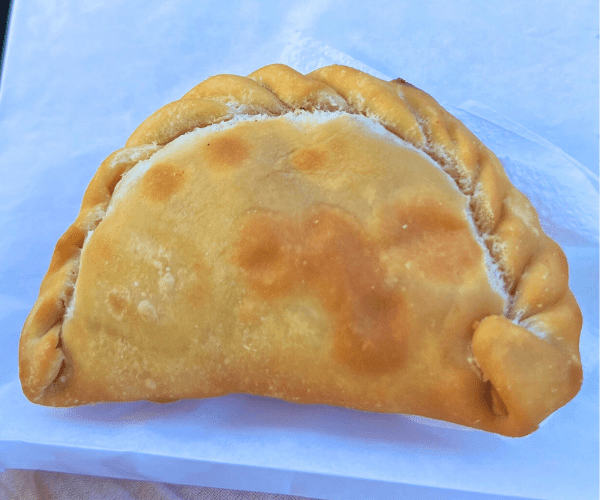
Pastechi are similar to empanadas being a crescent shaped fried dough filled with cheese (keshi), beef, chicken, tuna, or vegetables. You can find them anywhere, even little roadside markets or grocery stores. We grabbed them on our drives to beaches to enjoy as breakfast or lunch.
Bitterballen
Bitterballen is a dutch bar snack that pairs wonderfully with a beer. They are meatballs made with ground meat (usually beef or veal), cheese and veggies that are fried to crisp perfection. You will see them everywhere in Curacao from restaurants to snack shacks by the beach.
Poffertjes
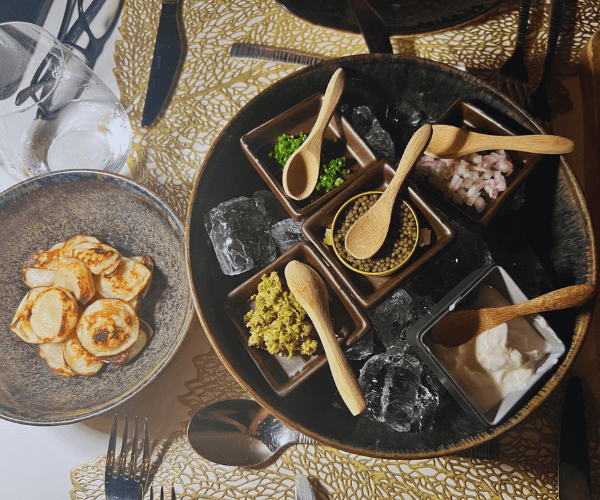
Poffertjes are tiny baby Dutch pancakes eaten with a dusting of powdered sugar by the beach or as a snack while walking around town.
Fresh Seafood & Indonesian Influences
Chicken Satay
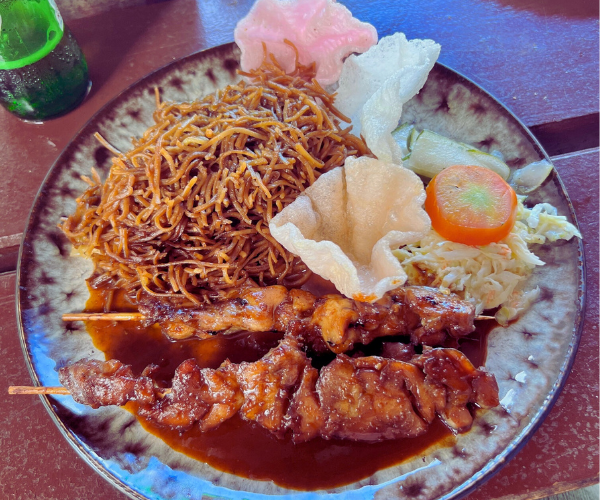
The heavy Indonesian influence on the food of Curacao was interesting to me. The Netherlands colonized both Indonesia and Curacao which is why you will see so much Indonesian food including chicken satay. Chicken satay is tender chicken skewers served with a delicious peanut sauce with a side of rice or noodles. I devoured it at the beach bar at Playa Porto Marie and at the Restaurant Saint Tropez Ocean Club but you will find it many places.
Tuna Tartare
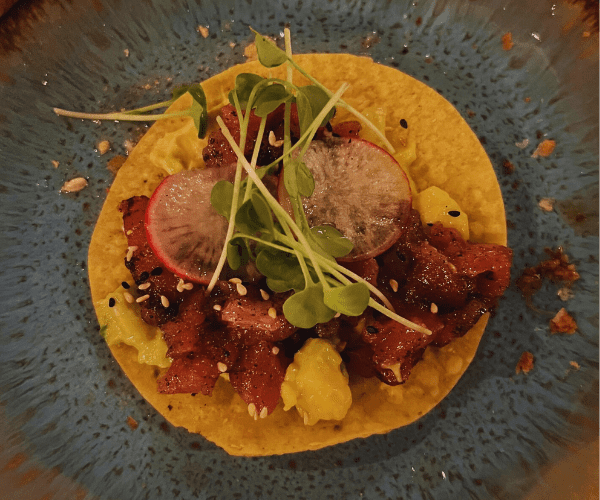
Another thing we found on most menus was some form of tuna tartare which made sense when I googled what fish was caught nearby and tuna was near the top of the list. I am a huge fan so I ate it almost every day in the form of poke bowls by the beach or in tacos for dinner. Tuna tartare tacos I enjoyed the most were at Mosa/Cana and Restaurant Saint Tropez Ocean Club.
BBQ
BBQ food trucks dot the sides of the road and tend to open later and stay open into the early morning. We had delicious BBQ at the restaurant bar at Playa Porto Marie from their 3 green egg smokers.
Drinks & Specialties
Curacao Liqueur
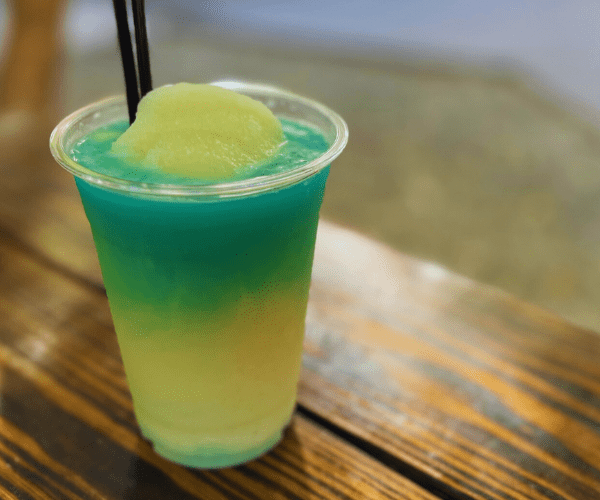
You will see the electric blue liqueur with the island’s namesake at every bar or restaurant in the city. Interestingly it is made from the peel of a bitter orange called Lahara that was grown abundantly on the island but is not enjoyable to eat as is. We stopped by the distillery which is in the mansion called Landhuis Chobolobo where you can take a quick self guided tour, enjoy a quick tasting, and then order a delicious frozen cocktail on their cute outdoor patio. There was also ice cream available and a cute gift shop with small travel friendly bottles available.
Smoothies
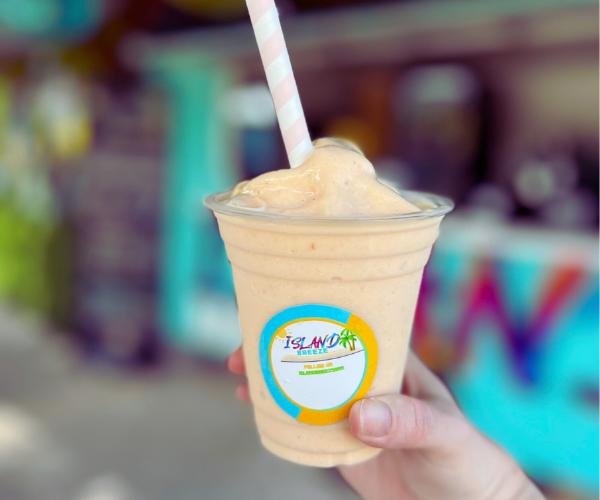
You will see smoothie stands along the road, downtown amongst the shops, and near the beaches. We stopped several times as they are a great way to cool off and of course they taste great! I love the wide variety of fruit offered at the stands and usually opted for a super tropical blend of mango, pineapple, and passionfruit.
Best Restaurants in Curaçao
Restaurant Saint Tropez Ocean Club
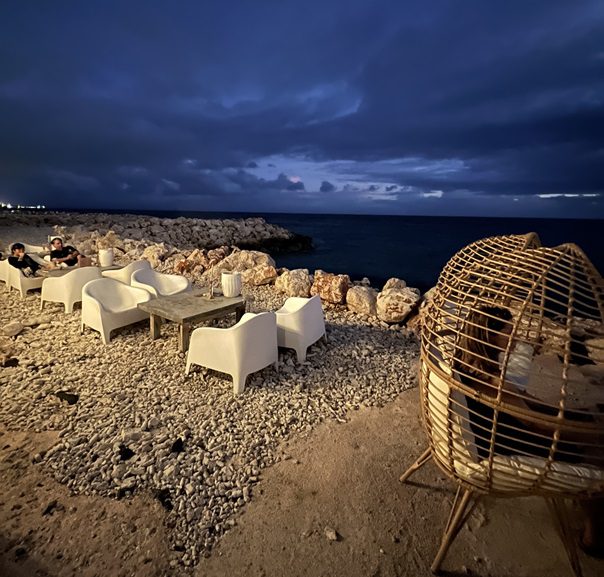
Upscale restaurant option with oceanfront dining and EXCELLENT tuna tartare tacos + fresh seafood. Beautiful sunset views.
Mosa Cana
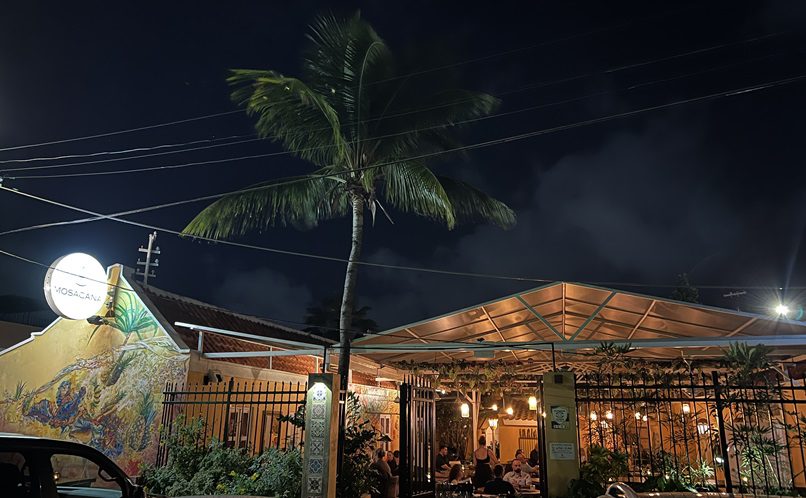
Our second favorite upscale option, Mosa Cana provides contemporary Caribbean cuisine with Asian influences. Once again the Tuna tartare tacos were OUTSTANDING! And really creative cocktails!
Playa Porto Marie and other Beach Bars
Casual beachside BBQ from three green egg smokers. Best pulled chicken sandwich and chicken satay on the island. Perfect lunch spot after snorkeling. We were surprised at how many beaches had beach bars that provide food, snacks, and drinks and how good the food actually was!
Local Favorites
Pastechi Houses & Bakeries (various locations) – Look for local bakeries opening early morning for the freshest pastechi. Gas stations surprisingly have good ones too.
BBQ Food Trucks – Along main roads, especially active evenings and late nights. Authentic local BBQ, cheap prices, great atmosphere.
Distillery Visit
Landhuis Chobolobo – Curaçao liqueur distillery in historic mansion. Self-guided tour, tastings, frozen blue cocktails on the patio. Also serves ice cream. Great for a midday break from beaches.
Smoothie Stands
Throughout Willemstad and near beaches – Fresh tropical fruit smoothies (mango, pineapple, passionfruit). Perfect for cooling off between activities.
Where to Find Authentic Local Food
Pastechi
- Local bakeries opening early morning (6-7am)
- Gas station convenience stores (surprisingly good!)
- Small markets in residential neighborhoods
- Plasa Bieu (old market turned food court) in Willemstad
BBQ
- Roadside food trucks (especially along main roads)
- Evening/late-night street vendors
- Beach parking lots
Indonesian Food
- Indonesian Restaurant “Batik Asli” (Eden Mall, Jan Thiel) – Most authentic Rijsttafel on the island while you’re in Willemstad
- Bali Restaurant Grote Berg (Kaya Grote Berg) – Popular Asian fusion with Indonesian dishes on the way to north side beaches
- Beach bars serving satay (Playa Porto Marie has excellent chicken satay)
- Look for “nasi goreng” or “bami goreng” on menus
Local Markets
Floating Market (Willemstad) – Venezuelan vendors sell fresh produce and fish from boats. Colorful, authentic, great for ingredients and snacks.
Plasa Bieu – Old market converted to food stalls serving traditional Curaçaoan dishes. Authentic local experience, very affordable.
Pro Tip: The best local food often comes from the most unassuming places – roadside BBQ trucks, small bakeries, beach shacks. Don’t judge by appearance; go where you see the most locals lined up.
Getting Around Curaçao for Food Experiences
Rent a car to fully experience Curaçao’s food scene
The best upscale restaurants, Indonesian restaurants, beach bars, food trucks and local spots are spread across the island. Batik Asli (Jan Thiel), Bali Restaurant (Grote Berg), and beach restaurants like Playa Porto Marie are all 20-40 minutes from Willemstad.
Why you need a car
- Best beaches, beach bars, and beach clubs require driving
- Explore the road-side food trucks and BBQ spots
- Batik Asli is in Jan Thiel and Bali Restaurant in Grote Berg (15 min drive)
- Markets and local spots scattered throughout island
🚗 Rent a Car in Curaçao
Renting a car was one of the best decisions we made in Curaçao. The freedom to explore the island completely at your own pace — stopping whenever something caught our eye, doubling back for a second look, discovering spots that weren’t on any itinerary — is something you simply can’t replicate in a taxi or tour bus. The island is small enough to feel manageable but spread out enough that a car genuinely unlocks a completely different experience. We loved every minute of it.
Compare car rental prices in Curaçao →Where to Stay in Curaçao for Foodies
Willemstad (Otrobanda & Punda)
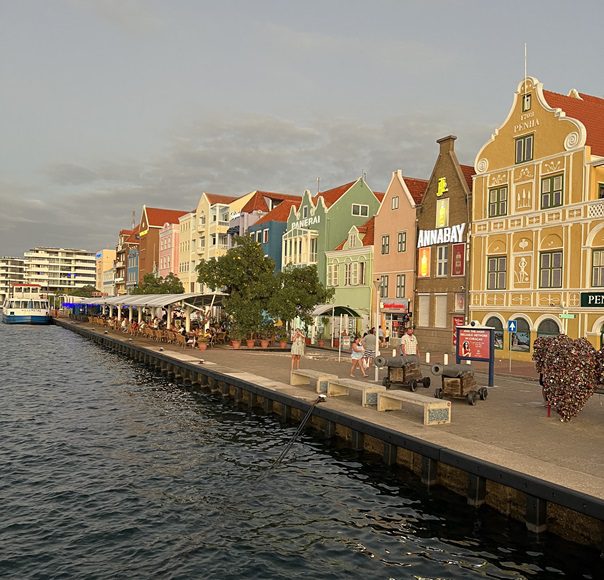
Stay in the historic center near Plasa Bieu market, Floating Market, and amazing restaurants like Batik Asli. Very walkable here, really fun to cross the colorful bridge which opens in a unique way when cruise ships come through. Great people watching, very friendly, we walked to dinner and walked back late in the evenings with absolutely no issues.
🏨 Where to Stay in Curaçao: Willemstad
Willemstad is our top recommendation for a home base in Curaçao — and where we stayed ourselves. We loved the Renaissance hotel for its infinity pool facing the ocean and its unbeatable central location. The strategy that worked perfectly for us: park your rental car at the hotel, take it out during the day to explore beaches and the island, then walk to dinner in the evenings along the waterfront. You get the freedom of a car without sacrificing the charm of being steps from the best restaurants in the city.
Browse Willemstad hotels →Pietermaai District
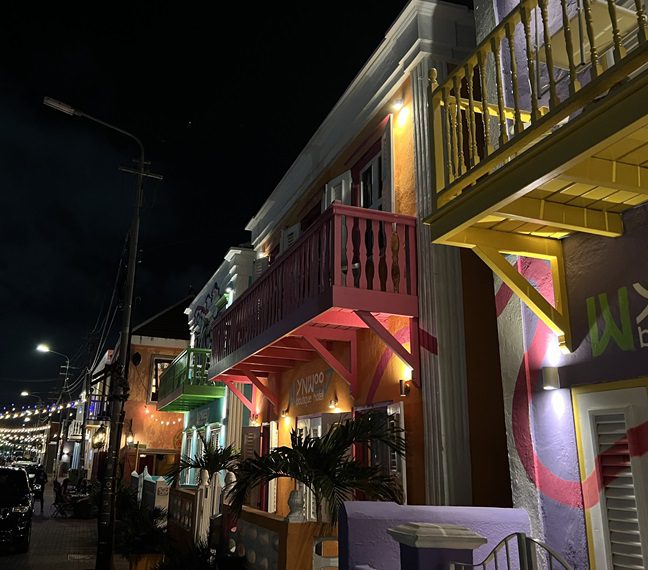
This is the only other spot we would recommend to stay if you would like to be close to the best restaurants and food in Curaçao. This is a trendy neighborhood with boutique hotels, upscale restaurants, and craft cocktail bars. Great for combining food experiences with nightlife.
🏨 Where to Stay in Curaçao: Pietermaai District
Pietermaai is one of the most charming areas to base yourself in Curaçao — close to the city centre, full of great restaurants like Saint Tropez, and genuinely lively in the evenings. It has a boutique, colourful energy that feels distinctly Curaçaoan, with cocktail bars and restaurants spilling out onto the streets as the sun goes down. A great choice if you want to be close to the action without being right in the middle of downtown Willemstad.
Browse Pietermaai District hotels →The One Experience You Must Book in Curaçao
If there’s one experience to book during your time in Curaçao, it’s the boat trip to Klein island. This uninhabited island just off the coast with some of the clearest water you’ve ever seen. We are completely biased because we love being out on the water, but there’s something about arriving at a deserted island by catamaran that feels genuinely special. Fair warning: the crossing can be a bit rocky depending on conditions, so if you’re prone to seasickness bring some Dramamine. Otherwise the boat ride alone is worth booking, and Klein Curaçao itself is the kind of place you’ll be talking about for years.
⛵ Best Experience in Curaçao: Klein Curaçao Catamaran Yacht Tour
4.6 stars across 227+ reviews — the top rated experience on the island. A full day catamaran to Klein Curaçao, the uninhabited island with crystal clear turquoise water and white sand that doesn’t look real. If you get seasick, bring Dramamine — the crossing can be rocky. But the boat ride and the island itself make this one of the most memorable days you’ll have in the Caribbean. Book in advance as spots fill up fast.
Book the Klein Curaçao boat tour →Frequently Asked Questions About Curaçao Food
What is the traditional food of Curaçao?
Pastechi (fried stuffed pastries with cheese, meat, or fish) is Curaçao’s most iconic dish, found everywhere from gas stations to bakeries. Other traditional foods include bitterballen (Dutch fried meatballs), fresh seafood (especially tuna), and Indonesian-influenced dishes like chicken satay. The cuisine blends Dutch, Caribbean, African, and Indonesian influences.
What is pastechi?
Pastechi is a crescent-shaped fried pastry filled with cheese (keshi), beef, chicken, tuna, or vegetables – similar to empanadas. They’re eaten for breakfast, as snacks, or quick lunches. You can find them at bakeries, markets, gas stations, and beach shacks across the island. The cheese-filled version (keshi) is most popular.
Is food expensive in Curaçao?
Curaçao offers a range of prices. Local food (pastechi, BBQ, food trucks, beach bars) is affordable – $3-8 per meal. Mid-range restaurants cost $15-30 per person. Upscale dining runs $40-80+ per person. Groceries are somewhat expensive as most items are imported. Overall, eating like a local is budget-friendly; resort dining is pricey.
What is Curaçao liqueur?
Curaçao liqueur (the island’s namesake drink) is made from bitter Lahara orange peels grown on the island. The famous electric blue version is sweetened and colored, but it also comes in clear, orange, and other colors. Visit Landhuis Chobolobo distillery for tours and tastings. It’s sold everywhere but authentic bottles from the distillery make great souvenirs.
What Indonesian food can you find in Curaçao?
Due to Dutch colonial connections, Curaçao has strong Indonesian influences. Common dishes include chicken satay with peanut sauce, nasi goreng (Indonesian fried rice), and bami goreng (fried noodles). Many beach bars and casual restaurants serve satay. The Indonesian spice blends also influence local Caribbean cooking.
Where can I find the best tuna tartare in Curaçao?
Tuna tartare is on most restaurant menus as tuna is caught in local waters. Best spots: Mosa/Cana (outstanding tartare tacos), Restaurant Saint Tropez Ocean Club (classic preparation), and most oceanfront restaurants in Willemstad. Beach bars often serve it in poke bowl form. Always fresh and often fusion-style with Asian influences.
Do I need reservations at Curaçao restaurants?
For upscale restaurants (Saint Tropez Ocean Club, Mosa/Cana), yes – especially December-April and weekends. Beach bars, food trucks, and casual spots don’t need reservations. Popular beach club restaurants during peak season benefit from advance booking.
Can you drink tap water in Curaçao?
Yes, Curaçao’s tap water is safe to drink – it’s desalinated seawater and very clean. Restaurants serve it, and you can refill water bottles. However, it has a slightly different taste than spring water due to desalination. Bottled water is widely available if preferred.
🌍 Keep Exploring Curaçao & Beyond
Loved Curaçao? Here’s where to head next:
- Curaçao Best Beaches — 8 perfect beaches for snorkeling, cliff jumping, and beach clubs
- Amalfi Coast Food Guide — clifftop trattorias, fresh seafood, and limoncello
- Norway Food Guide — brown cheese, reindeer soup, and cardamom waffles
- Barcelona Food Guide — tapas, pintxos bars, and Michelin dining
- Summer Packing List — everything you need for a warm weather Caribbean trip
📌 Save This Guide for Later!
Planning a trip to Curaçao? Pin this guide to your travel boards so you can find it when you’re ready to book — Dutch-Caribbean cuisine, keshi yena, chicken satay and all.
📌 Pin this guide →